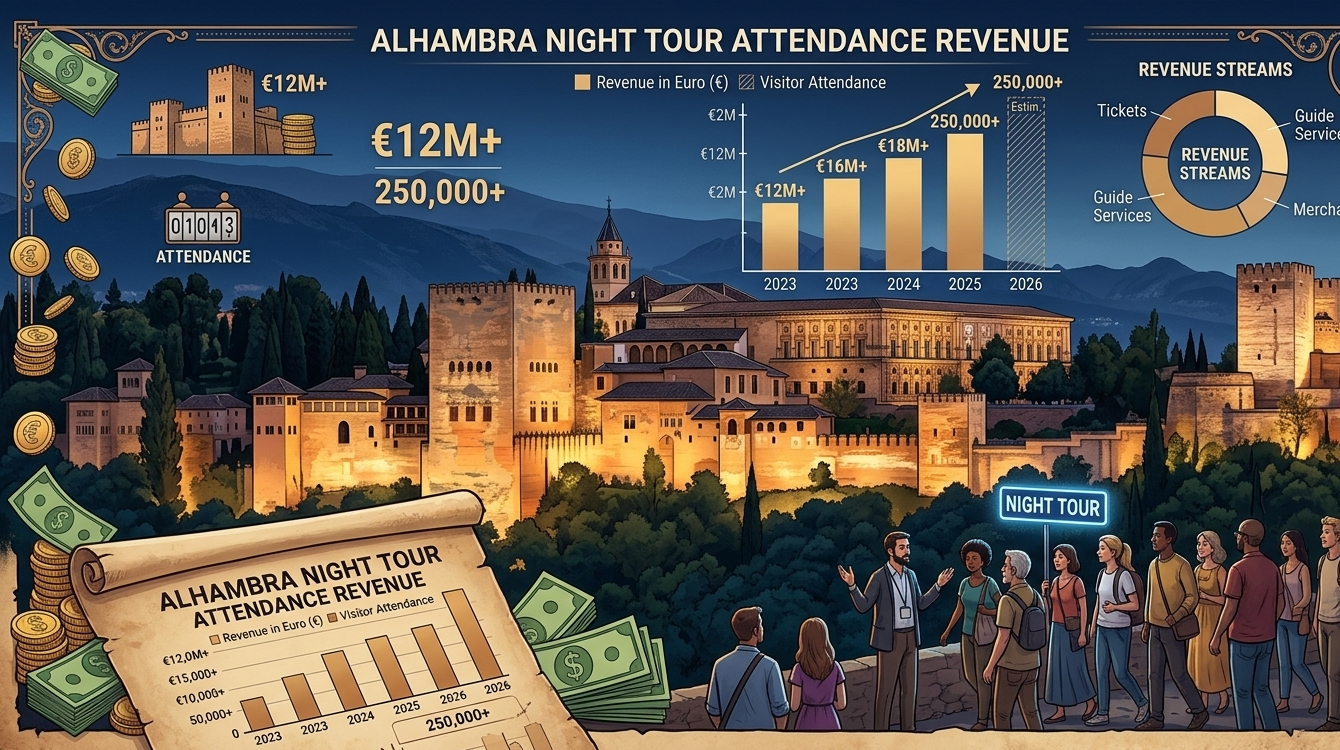
The story of alhambra night tour attendance revenue begins with a simple idea: turning an ancient palace into an unforgettable evening experience that blends history, architecture, and controlled visitor flow. Over time, alhambra night tour attendance revenue has become more than just a financial figure—it reflects how cultural heritage can sustain itself through carefully managed tourism.
When people talk about alhambra night tour attendance revenue, they are often referring to a complex system where limited entry, exclusive nighttime access, and high demand intersect. The Alhambra, already one of the most visited historical sites in Europe, transforms after sunset into a quieter, more intimate space. This transformation plays a major role in shaping alhambra night tour attendance revenue, making it distinct from daytime visitation patterns.
Unlike mass tourism attractions, alhambra night tour attendance revenue is heavily influenced by strict visitor caps, seasonal demand, and the premium nature of nighttime entry. This controlled approach ensures preservation while also maintaining a steady financial return.
Historical Background Behind Alhambra Night Tour Attendance Revenue
To understand alhambra night tour attendance revenue, it is essential to explore how the night tours were introduced in the first place. The Alhambra, located in Granada, Spain, was originally designed as a royal palace and fortress complex. Over centuries, it evolved into a UNESCO-recognized heritage site, attracting millions of visitors annually.
The introduction of night tours changed everything. Instead of overwhelming daytime crowds, a more curated evening experience was developed. This shift significantly impacted alhambra night tour attendance revenue, as the nighttime slots were intentionally limited to preserve the structure and ambiance.
As demand grew, alhambra night tour attendance revenue started to reflect not just ticket sales but also the exclusivity of the experience. Visitors were willing to pay more for quieter halls, illuminated courtyards, and guided storytelling under soft lighting. This premium positioning naturally elevated alhambra night tour attendance revenue over time.
How Visitor Attendance Shapes Alhambra Night Tour Attendance Revenue
Visitor numbers are at the core of alhambra night tour attendance revenue. Unlike daytime entry, which accommodates larger crowds, night tours are designed for smaller groups. This limitation directly affects alhambra night tour attendance revenue, making each ticket more valuable.
Because availability is restricted, tickets often sell out quickly, especially during peak travel seasons. This high demand-to-supply ratio strengthens alhambra night tour attendance revenue, ensuring consistent income even with fewer total visitors compared to daytime visits.
Another important factor is visitor behavior. Many travelers specifically plan their trips around the night experience, which increases the reliability of alhambra night tour attendance revenue throughout the year. Even during off-peak months, cultural tourism ensures a steady flow of guests contributing to alhambra night tour attendance revenue.
Pricing Structure and Its Impact on Alhambra Night Tour Attendance Revenu
Pricing plays a crucial role in shaping alhambra night tour attendance revenue. Night tours are generally priced higher than standard daytime entry due to their exclusivity and reduced crowd density.
This premium pricing model enhances alhambra night tour attendance revenue without requiring a massive increase in visitor numbers. Instead, value is created through experience quality rather than volume.
Special guided tours, private access options, and seasonal variations also influence alhambra night tour attendance revenue. For example, during peak tourist seasons, slightly higher prices can significantly boost alhambra night tour attendance revenue while still maintaining full bookings.
The balance between affordability and exclusivity is carefully maintained to ensure long-term sustainability of alhambra night tour attendance revenue.
Cultural Experience and Its Role in Alhambra Night Tour Attendance Revenue
The emotional and cultural value of the night experience is one of the strongest drivers of alhambra night tour attendance revenue. Visitors are not just paying for entry; they are paying for atmosphere, storytelling, and historical immersion.
The soft lighting of Nasrid Palaces, the silence of courtyards, and the guided explanations create a unique environment. This immersive setting directly enhances alhambra night tour attendance revenue, as word-of-mouth experiences increase demand.
Many travelers describe the night visit as more memorable than the daytime tour, which continues to strengthen alhambra night tour attendance revenue over time. This emotional connection ensures repeat interest and global recognition.
Operational Management Behind Alhambra Night Tour Attendance Revenue
Behind the scenes, managing alhambra night tour attendance revenue requires careful coordination. Strict visitor limits, time-slot scheduling, and preservation rules all influence how tours are conducted.
Staffing, security, and conservation efforts are also part of the system that supports alhambra night tour attendance revenue. Each visitor experience must be carefully timed to avoid overcrowding and ensure preservation standards are met.
Technology plays a supporting role in maintaining efficiency, ensuring that alhambra night tour attendance revenue is optimized without compromising the integrity of the monument. The system ensures smooth entry flow while maintaining historical protection.
Seasonal Variations in Alhambra Night Tour Attendance Revenue
Seasonality has a strong influence on alhambra night tour attendance revenue. During summer months, demand increases significantly due to international tourism. This leads to higher occupancy rates and stronger alhambra night tour attendance revenue performance.
In contrast, winter months often bring fewer visitors, but the exclusivity of night tours helps stabilize alhambra night tour attendance revenue even during slower periods.
Special cultural events, festivals, and holiday seasons also boost alhambra night tour attendance revenue, as travelers seek unique cultural experiences during their visits.
Economic and Tourism Impact of Alhambra Night Tour Attendance Revenue
The influence of alhambra night tour attendance revenue extends beyond the monument itself. It contributes to the local economy of Granada, supporting hotels, restaurants, and transportation services.
Tourism professionals often analyze alhambra night tour attendance revenue as an indicator of regional cultural tourism strength. High performance in this area reflects strong global interest in heritage-based travel experiences.
Local businesses benefit indirectly from alhambra night tour attendance revenue, as night visitors often extend their stays, contributing to broader economic activity in the region.
Visitor Experience and Emotional Value Driving Alhambra Night Tour Attendance Revenue
The emotional impact of visiting the Alhambra at night is one of the strongest contributors to alhambra night tour attendance revenue. Visitors often describe the experience as peaceful, reflective, and deeply immersive.
Unlike daytime visits, night tours allow guests to experience the monument without large crowds, enhancing the value of alhambra night tour attendance revenue through quality over quantity.
This emotional connection ensures that visitors often recommend the experience to others, indirectly strengthening alhambra night tour attendance revenue over time.
Future Outlook of Alhambra Night Tour Attendance Revenu
Looking ahead, alhambra night tour attendance revenue is expected to remain stable due to ongoing demand for cultural and historical experiences. However, future developments may focus on sustainability, digital enhancements, and improved visitor management systems.
As global interest in heritage tourism continues to grow, alhambra night tour attendance revenue will likely benefit from increased international attention. Balancing preservation with visitor experience will remain the key challenge.
Innovations in guided storytelling, lighting design, and visitor scheduling may further enhance alhambra night tour attendance revenue without compromising the historical integrity of the site.
Conclusion
In conclusion, alhambra night tour attendance revenue represents much more than ticket sales. It reflects a carefully balanced system of cultural preservation, visitor experience, and economic sustainability.
From its historical roots to its modern-day management, alhambra night tour attendance revenue demonstrates how heritage sites can thrive while maintaining authenticity. Its success is built on exclusivity, emotional engagement, and controlled access.
As tourism continues to evolve, alhambra night tour attendance revenue will remain a powerful example of how history and modern visitor demand can coexist in harmony, ensuring the Alhambra remains both preserved and financially sustainable for generations to come.